
The BRICS bloc, comprising Brazil, Russia, India, China, and South Africa, stands as a testament to the growing economic prowess of emerging markets. Established to foster greater economic collaboration and development among its members, the bloc wields significant influence on the global economic stage, representing over 40% of the world’s population and contributing substantially to global GDP.
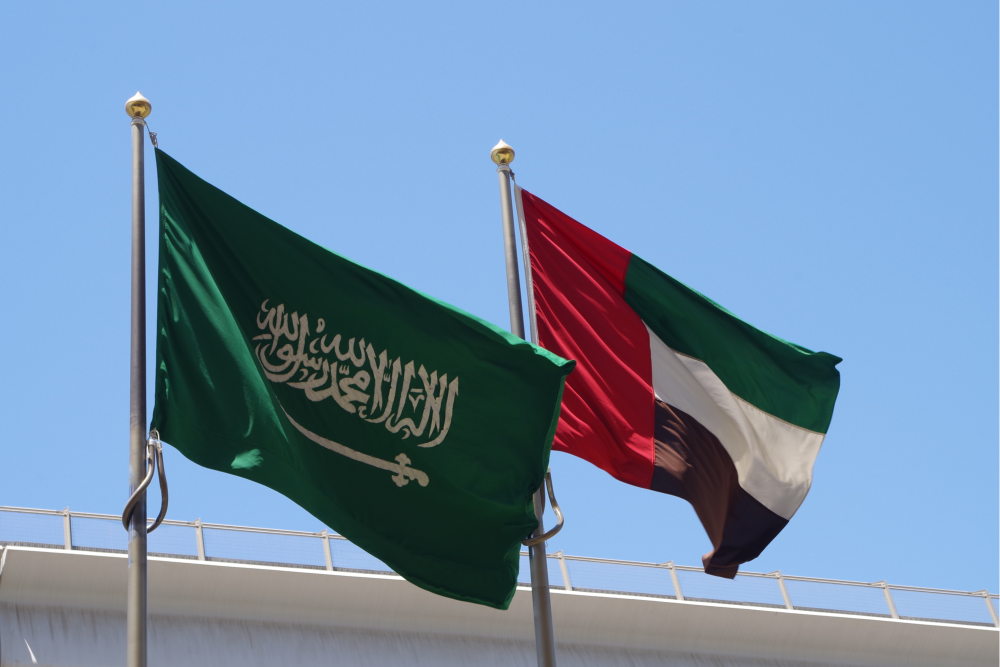
Recently, this influential group opened its doors to the United Arab Emirates (UAE) and the Kingdom of Saudi Arabia (KSA), marking a significant expansion. The inclusion of these two nations, both economic heavyweights in the Middle East, was motivated by their robust economic profiles, strategic global positions, and potential to enhance the bloc’s collective economic strength and geopolitical reach.
This expansion into a more inclusive, diversified international economic landscape highlights the growing importance and influence of emerging economies outside of the traditional Western sphere.
For businesses in the UAE, KSA, and the broader region, this development heralds new opportunities and challenges. It opens up avenues for enhanced trade and investment, access to larger markets, and potential for greater geopolitical influence. This move is poised to reshape the business environment in these countries, offering a fresh landscape of possibilities for companies operating there.
Economic Implications
The entry of the UAE and Saudi Arabia into the BRICS bloc represents a significant evolution in global economic relationships, integrating two of the Middle East’s most robust economies into a powerful collective.
Both the UAE and Saudi Arabia, renowned for their substantial per capita wealth and extensive sovereign funds, stand to gain significantly from this alliance. Their inclusion in BRICS could amplify opportunities in investment, trade, and commerce. Despite global economic challenges, these nations have shown resilience and continuous growth. Saudi Arabia, for instance, recorded a remarkable 8.7% growth in 2022, the highest among the world’s major economies, with a forecast for continued expansion, albeit at a moderated pace. This growth trajectory aligns with the kingdom’s Vision 2030, emphasising diversification beyond oil.
Similarly, the UAE’s economic projections remain positive, with an anticipated overall growth of 3.4% in 2023. This includes a balanced expansion across oil and non-oil sectors, the latter expected to grow by 4.5%. Key sectors like tourism, real estate, construction, transport, and manufacturing are driving this growth, supported by increased capital expenditure.
For both nations, joining BRICS opens up new market access and the potential for creating synergies with member countries, especially in technology, energy, and infrastructure. The UAE, with its sophisticated logistics and trade networks, is poised to become a strategic hub for BRICS expansion in the Middle East and Africa. Meanwhile, Saudi Arabia’s energy sector could provide vital resources for the economic growth of BRICS countries.
The integration of these Gulf economies into the BRICS framework is also likely to result in a more unified stance in global economic discussions. This collaboration challenges the dominance of Western economies and paves the way for a more diversified, multipolar economic order. It represents a recalibration of economic policies and alliances, with the UAE and Saudi Arabia leveraging the collective influence of BRICS to further their global economic interests.
Political Ramifications
The expansion of the BRICS bloc is a strategic development that resonates positively against the backdrop of current global economic and geopolitical challenges. It symbolises a proactive step by these nations in navigating the complexities of today’s international relations.
The UAE and KSA’s accession to BRICS signals a notable shift in their geopolitical strategies, reflecting a desire to expand their global influence and engagement. Moving beyond their traditional alignments, particularly in diplomatic and security domains, this move represents a diversification of their international alliances. Aligning with BRICS nations like Russia, China, and India, the UAE and KSA are carving out a role alongside nations that are increasingly seen as alternatives to Western dominance in global politics. This strategic realignment suggests a move towards a more globally balanced distribution of power, where influence is more distributed and not confined to any single bloc.
Moreover, the development is likely to inject new perspectives into the bloc’s handling of key global issues. With their unique geopolitical positions, the UAE and KSA can contribute significantly to discussions on energy security, climate change, and regional conflicts.
However, the shift could also lead to tensions with traditional allies and global powers who may view this realignment as a strategic counterbalance to their interests. The UAE and KSA will need to navigate these complex dynamics carefully, balancing new partnerships with BRICS while maintaining existing alliances. This delicate diplomatic balancing act will be crucial in defining their roles and influence in the evolving global political landscape.
Business Perspective
The integration of the UAE and KSA into the BRICS bloc signifies a transformative phase for the business sector in these countries and the broader region. This strategic integration is set to unlock a spectrum of opportunities while also posing new challenges for businesses.
Businesses in the UAE and KSA will now have enhanced access to the expansive markets within the BRICS nations. This is particularly advantageous for sectors like technology, renewable energy, and manufacturing. Furthermore, the strategic locations of the UAE and KSA could transform them into crucial trade hubs, bridging commerce between BRICS countries and the Middle East and African regions.
The stable economies of the UAE and KSA, coupled with their diversification initiatives, are likely to attract significant investments from other BRICS nations. Such investments promise to fuel further innovation, technological advancement, and infrastructure development.
As these nations align more closely with BRICS, businesses will need to adapt to potential changes in trade tariffs, customs regulations, and compliance standards. Agility and informed decision-making will be key in navigating this evolving regulatory landscape.
Another important aspect to watch is the potential shift towards bilateral trade in local currencies. Following the UAE and India’s agreement to promote the use of local currencies in cross-border transactions, there’s an anticipation of increased bilateral trade in local currencies between BRICS nations. This move could streamline transactions and enhance economic cooperation among these countries, particularly in light of discussions for similar arrangements with other nations.
Embracing new horizons
In essence, the inclusion of the UAE and KSA in the BRICS bloc heralds a new era for businesses in these regions, characterised by expanded market access and increased investment opportunities. The opportunity to leverage new trade partnerships and investment opportunities within the BRICS nations is both a significant step towards global economic diversification and a complex challenge. Businesses must be ready to understand and adapt to the nuanced shifts in international trade laws, financial regulations, and political dynamics that come with this new economic alignment.