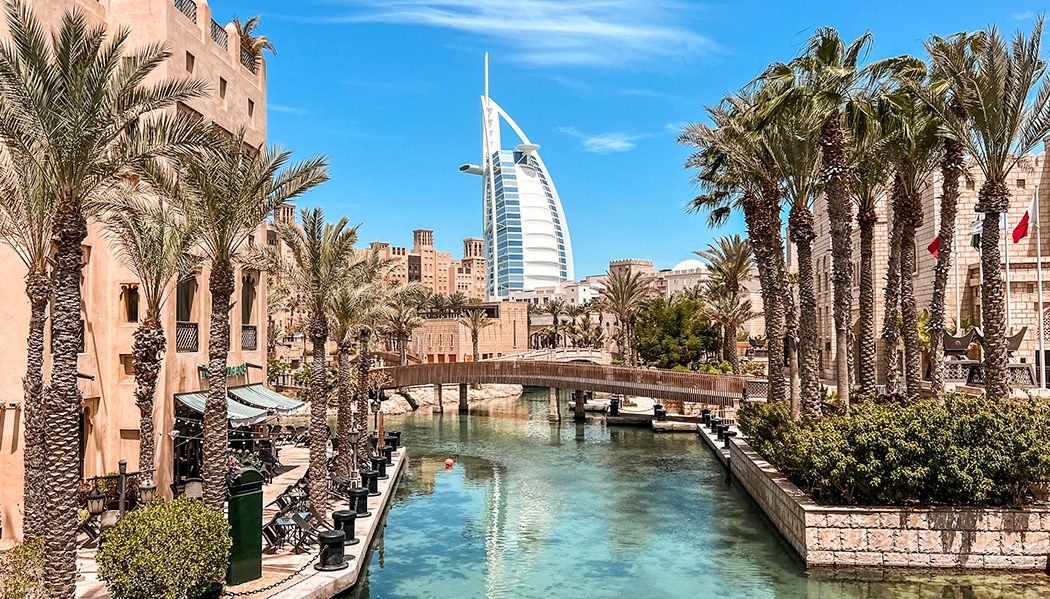
In the heart of the United Arab Emirates, Dubai stands as a beacon of modernity, innovation, and opportunity. Each year, thousands of entrepreneurs flock to the emirate looking to take advantage of its favourable tax policies, strategic geographic location, and dynamic business ecosystem.
But what is it that makes doing business in Dubai so easy and why should you consider moving and starting a business venture there?
Here are 8 reasons which make Dubai such a business-friendly city.
Tax free income
One of the main attractions of working and doing business in Dubai is the attractive tax incentives that it offers. There is no income tax in the UAE, so an individual’s salary and any other remuneration for their labour is exempt from any taxation. This puts the UAE in unique company as one of only 18 countries that still doesn’t impose income tax of any kind. Additionally, while corporate tax was introduced in June 2023, it has been set at just 9%, making it one of the lowest corporate tax regimes globally and much less than the average statutory rate of 23.7%. Businesses established within Dubai’s free zones also benefit from exemptions on customs duties for imports and exports which helps lower business operational costs, particularly for companies involved in manufacturing, trading, or logistics. Free zones also allow businesses to repatriate their profits and capital without significant restrictions, making it easier for companies to transfer funds to their home countries.
Gateway to emerging markets
Situated at the crossroads of Europe, Asia, and Africa, Dubai benefits from a strategic trading location which provides businesses with direct access to established European markets as well as the emerging markets of Asia and Africa. Many of the world’s fastest-growing economies are situated in Asia and Africa and these continents are home to a substantial portion of the global population, including a rising middle class with increasing purchasing power. Dubai, therefore, provides the perfect base for international expansion and the possibility to explore opportunities across multiple continents.
Global Connectivity
Dubai’s central location means that two thirds of the world’s population is within reach in a flying time of eight hours or less.
The emirate boasts world-class transportation infrastructure, including the world’s busiest airport (Dubai International Airport) and the world’s largest man-made harbour (Jebel Ali Port), which is connected to over 150 ports in more than 80 countries, offering extensive shipping routes and connections to various regions. This connectivity facilitates seamless movement of goods, people, and information between different regions of the world. Businesses can import goods, add value through manufacturing or processing, and then re-export them to various global markets, benefiting from Dubai’s efficient trade routes.
100% foreign ownership
Historically, foreign business ownership in the UAE was limited to 49% meaning that foreign businesses needed a local Emirati or corporate sponsor to hold a 51% ownership stake in the company. However, as a result of changes to Commercial Companies Law which were introduced in 2021, this is no longer the case. Foreign business owners can now enjoy full ownership and control of their companies and enjoy complete repatriation of their profits and capital.
Wide range of residency options
Becoming a Dubai resident is now easier than ever before. Recent changes to the UAE’s residency and visa regulations and the introduction of long-term residency options, such as the Golden Visa, Investor Visa and Entrepreneur Visa, have made it much easier for foreigners to obtain residency in Dubai and stay in the country for longer periods without the need to frequently renew their visas. Visit visa rules have also become more flexible and accessible, allowing businesses to apply for visit permits for their partners and associates quickly and with much less administrative burden.
The visa application process has further been streamlined by offering online platforms for visa applications, removing the inconvenience of filling out visa applications manually and needing to visit consulates, embassies, or visa application centres in person.
Supportive government initiatives
Among the hardest parts of getting a new business off the ground and scaling quickly is obtaining funding and being able to find the right industry support. This is one of the areas that Dubai really shines. There are numerous supportive initiatives and accelerator programmes that nurture startups and early-stage businesses, guiding them through the challenges of fundraising and connecting them with potential investors.
Programmes such as Dubai Future Accelerators, Dubai Startup Hub and DIFC FinTech Hive provide crucial support to businesses by offering mentorship, resources, funding opportunities, and a collaborative ecosystem which enables startups to refine their strategies, accelerate growth, and navigate the challenges of entrepreneurship successfully.
Free Zones
Free zones have revolutionised business investment in Dubai. As well as offering 100% foreign ownership, tax incentives and customs benefits, free zones are often tailored to specific industries which creates a concentration of expertise and support that allows businesses within the same sector to share knowledge, exchange ideas, and access specific industry support.
Free zones also provide a one-stop-shop approach, simplifying registration, licensing, and administrative procedures to make business setup as simple and painless as possible. They offer a range of business support services, such as legal, accounting, and administrative services, making it easier for companies to focus on their core activities while outsourcing essential functions.
Technology and innovation
Few other global cities embrace cutting-edge technology to the extent that Dubai does. It truly is a city of innovation and convenience.
Through its comprehensive Smart City initiatives, integrating advanced solutions such as IoT, data analytics, artificial intelligence, and smart infrastructure, Dubai has created a seamlessly interconnected urban ecosystem.
Initiatives such as Smart Governance which allows residents to access services like visa applications, business registration, and property transactions, and other smart services such as digital payment platforms, smart parking systems and digital health records, make daily life more convenient and efficient for residents and businesses.
Conclusion
Dubai’s appeal as a business-friendly city hasn’t happened overnight. It has evolved and developed thanks to strategic economic policies, robust infrastructure investments, and a proactive approach to embracing innovation and global connectivity. What it now offers is a unique environment that simplifies company setup, fosters international expansion, and encourages entrepreneurship.